FIND YOUR TRIP HERE

LAOS

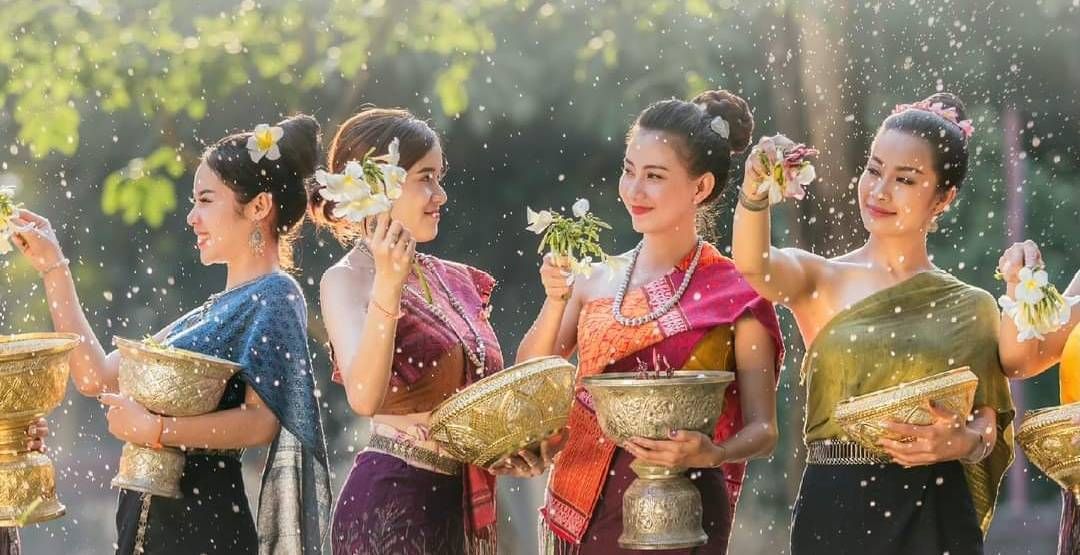
Laos is one of the most culturally and ethnically diverse countries in Southeast Asia, shaped by its location at the crossroads of the region. Across the country, many ethnic communities continue to preserve their unique traditions and ways of life. In the remote mountains of the north, the Hmong people maintain a strong connection to the land, while in the south and central regions, various ethnic groups keep alive distinctive customs and cultural practices passed down through generations.
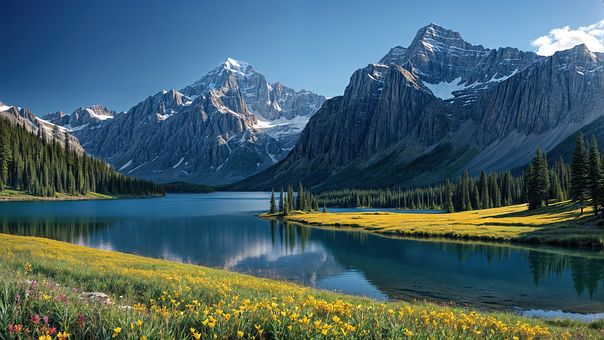
Beyond its cultural richness, Laos is known for its stunning natural beauty—from misty mountains and lush forests to tranquil rivers and scenic landscapes. With its peaceful atmosphere, deep traditions, and warm hospitality, Laos offers travelers a unique and authentic experience in one of Southeast Asia’s most fascinating destinations.

TELL US YOUR ENQUIRY

PLACE TO VISIT

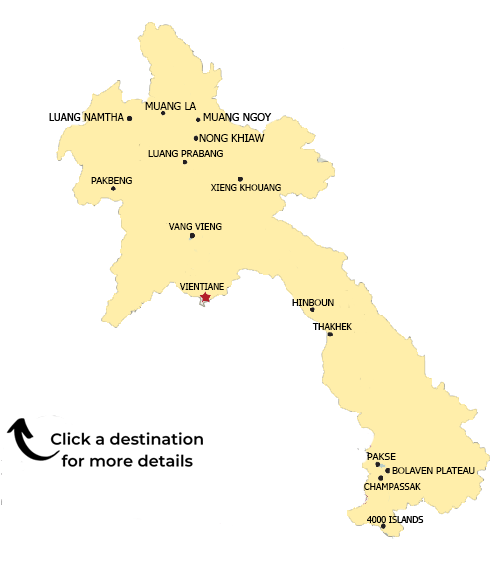
VIENTIANE LUANG PRABANG VANG VIENG NONG KHIAW XIENG KHOUANG 4000 ISLANDS PAKSE Luang Namtha MUANG LA MUANG NGOY Uang Prafang PAKBENG Plainor jans Yang Vieng Hinboun Thakhek Bolaven plateau Si phan don Thakkek Chavpassak

VIENTIANE

Vientiane, with a population of approximately 1 million, is the largest city and administrative center of Laos. It serves as a hub for political, economic, and cultural activities, attracting visitors with its harmonious blend of the past and present. Despite its unassuming appearance somewhere between a big town and a diminutive city, Vientiane quickly captivates travelers with its serene and alluring atmosphere, offering a unique experience that seamlessly combines a rich historical heritage, diverse cultural traditions, and modern conveniences. From the moment you set foot in Vientiane, you will feel at ease and welcomed.

💥 Best time to visit VIENTIANE 

Vientiane tends to be very hot and humid throughout the year, but temperatures in the city tend to be somewhat cooler during the dry season than the wet season. Plan your visit during the dry season from November to February when temperatures range from 30 Degree Celcius in the day to 15 Degree Celsius at night. 

💥 Best things to do in VIENTIANE 

  •  Gaze up at the tapered golden stupa of Pha That Luang, the largest and most beautiful pagoda. The image of this wonder is also printed on banknotes and the national emblem of Laos.  
  • Visit Buddha Park (Xieng Khuan), the bizarre park full of dozens of giant Buddhist and Hindu sculptures, 20 km from Vientiane.
  • The Patuxai Victory Gate is a massive concrete arch on Lang Xang Avenue. A symbol of Buddhism and Hindu deities, with its 5 ornate towers and Monument surrounded by Patuxai Park, make for an enjoyable evening stroll in Vientiane with stunning views to the city 
  • Visit Ho Phra Keo, an art world, which is decorated with unique sculptures and carvings and displays rare and precious artifacts inlaid with gold and inlaid with jade.
  • Treat yourself to a traditional herbal sauna and massage at Vientiane’s Wat Sok Pa Luang.
  • Buy some gifts at Talat Sao Market, a place for souvenirs bearing Lao identity. 

💥 How to get to VIENTIANE 

  • By air: Vientiane is Laos' major international hub for air travel. If you're arriving via Wattay International Airport in Vientiane, a taxi to town will cost US$7 or 57,000 kip for a sedan car and US$8 or 66,000 kip for a van. 
  • By road: The travel distance from Luang Prabang to Vientiane is about 340 km by road. The road networks in Laos are in poor condition and require upgrades, so don't expect high speeds when traveling by road in the country. 
  • Bus/car: The Northern Bus Station connects Vientiane with all destinations in Laos. Taking the bus is considered the cheapest way and you will have the opportunity to admire the wonderful sights along the way. You need to spend at least 11 hours moving. Otherwise, car rental is a more flexible and comfortable option for you.
  • Express train: From 3 December 2021, a 160 km/h train links Vientiane & Luang Prabang twice a day in as little as 2- 3 hours. If you travel from Thailand, you also can easily travel from Bangkok to Vientiane (or vice versa) by train. 
  • By boat: Speedboats on the river depart from Luang Prabang in the morning and usually take about 11 hours to reach Vientiane. Its capacity is up to 6 people and its price is quite reasonable.

LUANG PRABANG

Nestled amidst mountains and perched 700m above sea level, Luang Prabang has become Laos' premier destination, captivating travelers with its charming sights and enticing culture. The city boasts gleaming temple roofs and charming French architecture, creating a visually stunning experience. Moreover, Luang Prabang offers an extraordinary journey through its unique aesthetics, from historic temples to Buddhist ceremonies, the bustling river activity to the lively street-side markets. Every aspect of the city leaves an indelible impression, beckoning you to explore further.

💥 Best time to visit LUANG PRABANG

Located in the northern part of Laos, Luang Prabang experiences more distinct seasons, with a cool and dry period from November to March being the best time to visit. The monsoon begins in April, and peaks in August, Luang Prabang has a greater temperature range than more southerly cities. Nights can be very cold from December to February, while days in March and April can be extremely hot, before the rains arrive.

  💥 Best things to do in LUANG PRABANG
  •  ​Explore the UNESCO World Heritage city of Luang Prabang, with its historic temples, charming streets, and French colonial architecture. Don't miss Xieng Thong Temple, the oldest, most beautiful and most important temple in the ancient capital.
  • Witness the daily morning ritual of Tak Bat, where saffron-robed monks collect alms from locals, symbolizing a traditional Buddhist practice. Buddhists believe that by giving rice in this life ("making merit"), they are ensuring that they will not go hungry in their next life.
  • Experience the feeling of rowing on the Mekong River for half a day upstream, freely exploring the mountains and forests and then floating on the water watching the sunset.
  • Enjoy an evening Baci Ceremony, an extraordinary, spiritual and cultural experience and dining delicious Lao culinary.
  • Visit Pak Ou Cave (Buddhist cave) with thousands of Buddha statues inside the cave.
  • Go picnic at Kuang Si Waterfall, a prominent waterfall with layers of water flowing from high to low, creating attractive jade green lakes.
  • Go to Mount Phousi to see the whole city in miniature and more beautiful at sunset. On the top of the mountain there are many Buddha statues and temples with unique architecture. To get to the top of the mountain you have to go through 328 steps.
  💥 How to get to LUANG PRABANG
By air: Air travel is quick, easy, and by far the most comfortable option. The 40-50 minute trip from Wattay International to Luang Prabang costs between $60-155 for a one-way ticket. There are also flights to other destinations like Xieng Khouang and Pakse. International flights from Chiang Mai, Bangkok, Hanoi, and Siem Reap are available at Luang Prabang International Airport. 

By road: 

•    Private car/minivan: Renting a vehicle for the mountain route takes about 7 hours with no stops; with a few stops factored in, the journey can easily be made in under 9 hours and costs approximately US$230, plus daily fees and driver expenses. 

•    Bus: The overland route from Vientiane to Luang Prabang takes about 10 hours. A single ticket will cost between $22-33, depending on the type of bus you choose by public bus or sleeping bus. While there have been travel warnings about bumpy and winding stretches, the scenic journey passing through Vang Vieng and Hmong hill villages is worth considering. 

•    Express train: Travel time by train from Vientiane to Luang Prabang is about 2-3 hours by 160 km/h train system. 

By boat: Boat travel is popular, with daily departures from Houayxay to Luang Prabang. The trip takes about 1 1/2 days, with an overnight stay in Pak Beng. Speedboats, although uncomfortable and noisy, offer a faster journey of around 7 hours if there are enough passengers.

VANG VIENG

Located about 150 km from the capital Vientiane of Laos, the small town of Vang Vieng is nestled in the vastness of green mountains and forests.  With the advantage of ideal terrain - back against the mountain, facing the river, Vang Vieng town is known as a peaceful countryside on the Nam Song river with a fresh and cool climate. This small town hides in itself a wild feature from the green of the trees and the river flows year-round smoothly winding around the limestone ranges.

Vang Vieng is the first choice for those who love to explore the wild nature or experience thrills such as climbing, kayaking, ziplining….

When sunset falls, the small Vang Vieng becomes bustling and crowded with the Western Quarter. Visitors can buy all kinds of goods, souvenirs, or any service here at reasonable prices and discover the culture of the indigenous people through rustic dishes


💥 Best time to visit Vang Vieng 

It is from October to February, when the weather is not too hot and the humidity is manageable.  
 

💥 Best things to do in Vang Vieng

  • Explore the two caves Tham Xang and Tham Nam by gliding, kayaking across the Nam Song River. 
  • Climb mountains in rocky areas with undulating and rugged structures and wild caves.
  • Cycle to discover the highlights of the town such as: the tree-lined forest, the golden fields of ripe rice, or the ancient cave of Phou Kham
  • Visit Tham Hoi cave where there is a colorful Buddha statue, Tham Loup cave with a majestic golden reclining Buddha image.
  • Vang Vieng has three beautiful Blue Lagoons. At Blue Lagoon 1 you will be challenged with a tough water slide. Blue Lagoon 2: you will be able to relax swimming in the calm water. Blue Lagoon 3 allows you to ride a bamboo raft and then dive into the water

💥 How to get to VANG VIENG 

Vang Vieng does not have an airport, so the distance between Vientiane and Vang Vieng is approximately 130 kilometers by road.

By road: 

  • Private car/minivan/bus: Travel by tour bus or minivan from Vientiane to Vang Vieng takes about 1.5-2 hours
  • Express train: Going by train from Vientiane to Vang Vieng takes about 1-1.5 hours. But the train has a very limited schedule.


NONG KHIAW

Nong Khiaw is a village in Luang Prabang province, Northern Laos. It sits on the Nam Ou River with narrow footpaths winding through the jungle and climbing steep limestone cliffs for sweeping views. This is a great spot to visit if you enjoy hiking or if you just want to explore the countryside of Laos.

Some of the must-visit attractions while you're cycling include local villages inhabited by Hmong and Khmu communities as well as beautiful jade rice fields and unspoiled jungles.

In the center of town you will find a series of small but ornate temples colorfully decorated. Another favorite activity is following the Nam Ou River and walking along the leafy banks, admiring the local scenery.

💥 Best time to visit Nong Khiaw

It is from mid-October to February. The weather is not hot and humidity is lower during these months. This is a great time to get out about hiking, biking, and exploring the caves. 

💥 Best things to do in Nong Khiaw 

  • Go to Pha Tok cave by yourself to admire the beautiful limestone rocks. Have a walk through rice fields, dense forest sections and you need to climb a steep staircase.
  • Experience the beautiful Nam Ou river by boat and enjoy the unspoiled scenery of the surrounding countryside.
  • Check out Pha Kuang Cave to admire stalactites, stalagmites as well as shimmering rock crystals.  
  • Climb to the top of Phadeng to see the sunrise and when walking down, you can see sections of the Nam Ou River.

💥 How to get to Nong Khiaw

The distance between Luang Prabang and Nong Khiaw is 91 km. The road distance is about 140 km. 

By road:

  • Car: The quickest way to get from Luang Prabang to Nong Khiaw is by car or taxi rental,  taking  2h 15m.
  • Bus: is a much cheaper way but will take nearly 4 hours to get to Nong Khiaw. 

XIENG KHOUANG

435 km southwest of Vientiane capital, there is a large plateau with a cool climate and many famous sights. It is Xieng Khouang province located at an altitude of 1,200m above sea level. This land has diverse terrain and scenery with hot springs, forests, beautiful waterfalls and monuments.

Mixed in the vast primeval forests and the magnificence of the ancient culture are modern cities growing up. It is the modern and ancient beauty that has created the mysterious and beautiful Xieng Khouang. Here, the mystery of the field of jars with thousands of stone jars that are hundreds or even thousands of years old, along with the wild scenery and fresh nature is the reason why tourists from all over the world are extremely excited.

💥 Best time to visit Xieng Khouang 

It is from November to February. Those months the weather becomes cooler.

💥 Best things to do in Xieng Khouang

  • Visit the Plain of Jars, a cluster of fields including thousands of different large and small stone jars. In addition, you will admire waterfalls, primeval forests and idyllic Hmong villages
  • Take a trip to the Mulberry Organic Silk Farm in Xieng Khouang to participate in one stage of the entire silk-making product, you will understand how silkworm farming is provided and techniques, art and craft weaving.  
  • Explore Muang Sui with its beautiful high limestone cliffs, beautiful Nong Tang Lake, the perfect place to have a picnic or experience water sports.
  • If you want something more adventurous, don't miss Tham Pa, a vast network of caves containing hundreds of Buddha statues and you will have to go deep into the hill.
  • Check out the ruined temple called Wat Ban Phong with a stunning stupa with stucco design and an elegant base of the main hall.
  • Muong Khoun town offers you a chance to see Buddha statues and stupas to help you experience Lao culture in Xieng Khoang more.
  • Visit Tad Ka, one of the most beautiful spots in Xieng Khouang where a waterfall falls 100 meters on a magnificent limestone mountain.

💥 How to get to Xieng Khouang 

By air:  The flight distance from Vientiane to Xieng Khouang is 174 km. The expected flight time from Wattay International Airport to Xieng Khouang Airport is 42 minutes.

By road:

The overland distance between Vientiane and Xiengkhuang is 390 km

•    Van/Car: the fastest way to travel between Vientiane and Xiengkhuang. The van will take you there in 10 hours
•    Bus: the cheapest option but much slower and takes up to 20 hours to reach Xiengkhuang.

4000 ISLANDS

4000 ISLANDS has a laid-back atmosphere where visitors can relax and enjoy nature. Surrounded by the Mekong River, waterfalls, and scenic Laos countryside, the islands are home to a number of pristine beaches, temples, and glimpses into history. Interesting wildlife, cycling trails, and floating restaurants make up an interesting and varied itinerary for visitors.

All around the 4000 Islands, there are a series of waterfalls and rapids. Perhaps the most impressive of these is Khone Phapheng Falls, best seen from Don Khong island.
 

💥 Best time to visit 4000 ISLANDS

 It is from November to January, when the weather is dry, with little rain but cool. 


💥 Best things to do in 4000 ISLANDS

  • Visit Don Khon, the largest of the 4,000 islands to see 15 temples and French colonial buildings. You'll find 19 villages on the island and can rent motorcycles or bicycles to get around the island
  • Don Det is much smaller and a favorite on the backpacker trail. Don Det is the cheapest island to visit - in terms of accommodation, food and drink
  • Choose to stay in Don Khone if you want to relax. The street is very quiet, the food is great. You will find Lao dishes that you really love.
  • Head to Khone Phapheng waterfall, the largest waterfall in Southeast Asia. You can also take a kayak trip to see the waterfalls.
  • Cross the old bridge to Don Po Soi Island and hike to the Khon Pa Soi Falls, one of the prettiest waterfalls in the area. 
  • Check out the Ban Khon Steam Locomotive, a relic from the colonial era, created to bypass the rapids and waterfalls that blocked the route of ships sailing up the Mekong River.  
  • Visit the Buddhist temple Wat Khon Tai features classical East Asian architecture and ornate carvings. 
  • Take a boat tour or rent a kayak to Si Phan Don to see Irrawaddy dolphins.

💥 How to get to 4000 ISLANDS

The overland distance between Vientiane and the 4000 Islands is 737 km. 

  • By road: The first (and cheapest option) is to take the night bus from Vientiane to Pakse, and then keep going with a van or another bus. It takes about 17 hours to reach 
  • By air and road: There is no airport in 4000 islands. But if you’re short on time or just want some extra comfort, you can take a flight to Pakse then take the bus or van after that in about 3 hours to 4000 Islands. 


PAKSE

Pakse, also known as Pakse, is the charming capital of Champasak province in the south of Laos. This place is famous for the Bolaven plateau, Si Phan Don archipelago, the Sedone and Mekong Rivers.

In this riverside town, you can spend your time watching the river and strolling by the river. Some other reasons to visit Pakse include interesting colorful markets as well as beautiful temples

Pakse is also a land with many unique festivals, attracting visitors such as Wat Phou, Pha Veat, Khao Phansa... In addition, Pakse cuisine is also very delicious, especially the extremely attractive fish and crayfish dishes. In the afternoon, sitting in a restaurant on the river watching the sunset fall to the west is extremely impressive.

💥 Best time to visit PAKSE

The best time to visit Pakse is from October to February, when the weather is not hot and the humidity is manageable. 

💥 Best things to do in PAKSE

  • Visit Wat Phou, located at the foot of a sacred mountain called Phou Kao. Wat Phou is the oldest temple of Laos
  • Rent a bike and go out of town across the Mekong River and you'll see a giant golden Buddha along the way. Park your bike and climb the steps to the top for a panoramic view of Pakse
  • Spend a leisurely afternoon exploring Wat Luang - the largest and most beautiful temple in Pakse , or Phabat and any of the other 18 temples in Pakse.
  • As a history and culture lover you need to visit Champasak Historical Heritage Museum where Dong Son drums are made of bronze and ornate stone carvings
  • Come to see waterfalls, coffee farms, ethnic weaving and woodworking villages
  • Do not miss the Bolaven Plateau, a vast plateau covered with rivers, majestic jungles and cascading waterfalls.

💥 How to get to PAKSE

Travel distance from Vientiane to Pakse by road is about 670 km

By air: It is the best and fastest way. Flight time is only about 1 hour 15 minutes. 

By road:  From Vientiane to Pakse travel by bus, van or car from Vientiane to Pakse takes about 10-12 hours


Luang Namtha

Luang Namtha, located in northern Laos, is a paradise for nature lovers and adventure seekers. The region is renowned for its lush green landscapes, ethnic diversity, and ecotourism opportunities.

💥 Best time to visit Luang Namtha:
The best time to visit Luang Namtha is from November to February when the weather is dry and pleasant, making it ideal for cool trekking and outdoor activities. Notably, northern Laos receives less rainfall compared to the south. Thus, visiting from June to October is a smart choice for fewer crowds and budget-friendly travel. 

💥 Best things to do in Luang Namtha:
Embark on a trekking expedition in Nam Ha National Protected Area, home to diverse flora and fauna.
Explore the Nam Dee Waterfall, a hidden gem surrounded by lush forests, and enjoy a refreshing dip in the natural pools. 
Visit ethnic villages and interact with local communities, such as the Akha, Khmu, Hmong and Lanten people, to learn about their unique way of life.
Shop and eat in Luang Namtha’s bustling morning and night markets.

💥 How to get to Luang Namtha:
By air: You can fly into Luang Namtha via Wattay International Airport in Vientiane, the capital of Laos. From there, a short domestic flight will swiftly take you to Luang Namtha Airport.
By road: If you prefer a scenic route, consider embarking on a road trip. Well-maintained highways connect Luang Namtha to various cities and towns within Laos, providing an opportunity to soak in the country's picturesque landscapes. A bus trip departing daily from Vientiane takes 22-hours. It takes 3 hours if you start from Oudomxay and 4 hours from Houay Xay. A morning bus leaves Luang Prabang for an 8-hour ride, and a morning bus departs Muangla in Yunnan, China, for the 2-hour drive.
Express train: It takes around 3-4 hours by high speed train to arrive at Natuey Station, then continues taking minivan/taxi to Luang Namtha Town about 37 km (30 minutes)

MUANG LA

Muang La is a serene and off-the-beaten-path destination in northern Laos in Oudomxay Province, offering tranquility and cultural experiences. This little charming town is known for its hot springs, picturesque landscapes, and the mighty Nam Pak River. 

💥 Best time to visit Muang La:
The best time to visit Muang La is in the dry season from November to March when the weather is cool and dry. April sees the beginning of warmer weather, but it's relatively cool in this mountainous region throughout the year. 

💥 Best things to do in Muang La:
Relax in the natural hot springs of Muang La Resort, known for their therapeutic properties.
Take a boat trip on the Nam Pak River and enjoy the scenic beauty of the surrounding mountains and villages.
Visit local markets and discover traditional handicrafts, such as weaving and silver jewelry making. 
Visit the different hill tribe villages dotted throughout the rolling green hills,  a wonderful place to learn about Laos’ ethnic minorities, with Akha, Hmong located in the surrounding mountains

💥 How to get to Muang La:
By air: There are no direct flights to Muang La. You can take a short domestic flight from Vientiane to Oudomxay, followed by a scenic drive to Muang La. 
By road: For those who relish the journey, road tripping to Muang La is a picturesque endeavor. Buses from Phongsali to Muang La take about 8 hours. The transfer time between Muang La and Oudomxay is about 2 hours.

MUANG NGOY

Muang Ngoy, a remote village nestled in the heart of northern Laos, offers a unique and tranquil escape from the modern world. It is a place of stunning limestone cliffs, lush rice paddies, and a slow-paced way of life.

💥 Best time to visit Muang Ngoy:
Dry season from November to March is the best time to visit Muang Ngoy. The weather is cool and dry, providing pleasant conditions for exploration and trekking.

💥 Best things to do in Muang Ngoy:
Trek to the viewpoint atop Pha Daeng Mountain for breathtaking panoramic views of the Nambak River and surrounding karst landscapes.
Take a boat ride along the Nambak River and immerse yourself in the serene countryside scenery.
Interact with the friendly locals, experience village life, and savor authentic Lao cuisine.

💥 How to get to Muang Ngoy: 
You can take a bus or private car in  4 hours from Luang Prabang to Nong Khiaw. There is no road from Nong Khiaw to Muang Ngoy so you have to take a short boat ride. Boats leave twice daily from Nong Khiaw at 10.30 am and 2.30 pm.
If you use bus or car driving from Dien Bien Phu, Vietnam, it takes approximately 7 hours to Luang Prabang and continue on a 1,5 hours boat trip to Muang Ngoy.  

Uang Prafang

PAKBENG

Pakbeng, meaning ‘mouth of the river’ in Laos is a serene riverside town located along the Mekong River, popular as a stopover point for tourists journeying between Luang Prabang and Huay Xai. 

💥 Best time to visit Pakbeng:
The best time to visit Pakbeng is from November to February when the weather is dry and not too hot, providing comfortable conditions for exploration and boat trips on the Mekong.

💥 Best things to do in Pakbeng:
Witness the captivating sunset over the Mekong River from Pha Hee Viewpoint.
Visit the Pakbeng Market and experience the vibrant atmosphere of local trading and cultural exchange.
Take a boat trip on the Mekong River to Huay Xai or Luang Prabang and enjoy the picturesque landscapes along the way.

💥 How to get to Pakbeng: 
By boat: Travelers can take a boat from Luang Prabang to Pakbeng, or vice versa, as part of the two-day Mekong River cruise, covering the 300 km journey.
By road:  Most go to Pakbeng by river, but there is a good paved road from Oudomxay, 144 km away. It takes about 3 - 4 hours by bus or car transfer. 

Plainor jans

Yang Vieng

Hinboun

Hinboun, a small district of Khammouane Province in central Laos, is a region of natural wonders, with lush jungles, limestone caves, and picturesque karst landscapes. It is an excellent destination for eco-tourism and outdoor adventures.

💥 Best time to visit Hinboun:
Hinboun's weather is hot year round but the best time to visit is from November to February when it is cooler and dryer. 

💥 Best things to do in Hinboun:
Explore the stunning Kong Lor Cave, an impressive limestone cave system with a 7.5-kilometer-long river passing through it.
Take a boat ride or kayak down the Nam Hinboun River, marveling at the magnificent stalactites and stalagmites. 
Trek through the dense Hinboun National Protected Area and spot diverse wildlife and plant species.

💥 How to get to Hinboun: 
By road: Hinboun can be accessed by taking a bus or private car from Vientiane or other major cities in Laos. It takes approximately 4,5 hours to drive from Vientiane to Hinboun with a 290 km journey. 

Thakhek

Thakhek in Khammouane Laos, is a charming town on the banks of the Mekong River. It is considered a gateway to the famous Thakhek Loop, a popular motorbike route through the scenic landscapes of central Laos.

💥 Best time to visit Thakhek:
The best time to visit Thakhek is in the dry season, from November to February when the weather is cool and dry, making it ideal for motorbike trips and exploration.

💥 Best things to do in Thakhek:
Embark on the Thakhek Loop and explore limestone caves, stunning waterfalls, and rural villages along the way.
Visit the Buddha Cave (Tham Pha Fa), known for its impressive collection of Buddha statues and a serene reclining Buddha image.
Take a boat trip on the Mekong River to enjoy the scenic beauty of the surrounding countryside.

💥 How to get to Thakhek:
By road: Travelers can take a bus or private car from Vientiane to Thakhek, which takes around 6-7 hours. 

Bolaven plateau

The Bolaven Plateau, located in the southern highlands of Laos, is a region of breathtaking waterfalls, lush coffee plantations, and picturesque landscapes. It offers a refreshing escape from the tropical lowlands with heights of 1300 m. 

💥 Best time to visit Bolaven Plateau:

The best time to visit the Bolaven Plateau is from November to March when the weather is cool and dry, providing pleasant conditions for exploration and waterfall visits.

💥 Best things to do in Bolaven Plateau:

  • Discover the stunning Tad Fane Waterfall, a twin cascade plunging into a deep gorge.
  • Visit local coffee plantations and learn about the coffee-making process from bean to cup.
  • Trek through the lush forests and enjoy the cool climate and fresh air of the plateau.

💥 How to get to Bolaven Plateau:

By road: From Pakse, you can take a bus or private car in  an hour to get to Bolaven Plateau.


Si phan don

Thakkek

Chavpassak

Champasak, situated in southern Laos, is a province of historical significance and natural beauty. It is home to the UNESCO-listed Wat Phou, a pre-Angkorian temple complex, and the picturesque 4,000 Islands (Si Phan Don).

💥 Best time to visit Champasak:
Champasak has a tropical climate but cooler than other places in Laos. The dry season spans from November to March is the best time to visit Champasak with dry and pleasant weather. 

💥 Best things to do in Champasak:
Explore the ancient ruins of Wat Phou and soak in the spiritual ambiance of the sacred site.
Take a boat trip to the 4,000 Islands and spot the rare Irrawaddy dolphins in the Mekong River.
Relax on the peaceful islands of Don Det and Don Khon, surrounded by serene landscapes.

💥 How to get to Champasak:
By road: The road distance between Pakse and Champasak is 35.5 km. It takes less than 1 hour to Champasak by car or bus easily. 

EXPERIENCES

Useful Information

Laos, officially the Lao People’s Democratic Republic, is a peaceful landlocked country in Southeast Asia with a population of around 7 million people. Known for its stunning natural landscapes and rich cultural heritage, Laos offers a relaxing and authentic travel experience.

The Mekong River flows through the country, while mountains, waterfalls, caves, and lush countryside create a paradise for nature lovers. Laos is also famous for its colorful local markets, traditional handicrafts, and flavorful cuisine, where sticky rice is a staple food.

With its laid-back atmosphere and warm hospitality, Laos welcomes travelers looking for a calm and genuine Southeast Asian journey with Maitravel.

visa and entry procedures

Most travelers can obtain a Visa on Arrival (VOA) when entering Laos through international airports or major land border checkpoints.

Requirements:

  • Passport valid for at least 6 months
  • Completed visa application form
  • Passport-sized photos
  • Visa fee paid in USD (cash)

The Visa on Arrival is usually valid for 30 days and can often be extended for another 30 days at immigration offices in Laos.

Travelers can also apply for a visa in advance through a Lao embassy or consulate in their home country.

For longer stays, visa extensions are available at immigration offices in Vientiane or other major cities.

Maitravel is happy to provide updated visa information and assistance for your trip to Laos.

transportation

Laos offers several transportation options for travelers:

By Air
Domestic flights connect major cities such as Vientiane, Luang Prabang, and Pakse, making it the fastest way to travel long distances.

By Bus
Buses and minivans are the most common way to travel between cities. VIP buses offer more comfort for longer journeys.

Tuk-tuks & Taxis
Tuk-tuks are widely used for short trips within towns and cities. Taxis are available in larger cities like Vientiane and Luang Prabang.

Motorbikes & Bicycles
Motorbike and bicycle rentals are popular for exploring local areas and countryside.

River Boats
Boat travel along the Mekong River is a scenic way to experience Laos, especially between Huay Xai and Luang Prabang.

telecommunications

  1. Mobile phone use is common in Laos. The main network providers are Lao Telecom, Unitel, and Beeline, offering 3G and 4G services in most cities, while coverage in remote areas may be limited.

    WiFi is available in many hotels, cafés, restaurants, and guesthouses, especially in major towns such as Vientiane and Luang Prabang.

    Travelers can easily purchase a local SIM card at airports or mobile shops. A passport is required for registration.

    International calls can be made via mobile phones, landlines, or internet-based communication services.

currency money exchange

The official currency of Laos is the Lao Kip (LAK). However, US dollars and Thai Baht are also widely accepted, especially in tourist areas.

Foreign currency can be exchanged at banks, exchange counters, and international airports. Exchange rates may vary, so it’s advisable to compare before exchanging money.

ATMs are available in major cities such as Vientiane and Luang Prabang, allowing withdrawals in Lao Kip. Credit and debit cards are accepted in larger hotels and restaurants.

For small purchases or local markets, it is recommended to carry cash in Lao Kip.

shopping

  1. Laos is well known for its traditional handicrafts, including handwoven textiles, silk products, silver jewelry, and handmade souvenirs. Visitors can explore local markets and artisan shops in cities such as Vientiane and Luang Prabang.

    Popular places like the Morning Market (Talat Sao) and the Luang Prabang Night Market offer a wide range of items, from clothing and accessories to spices and local food products.

    Travelers can also find beautiful Lao silk scarves, traditional sinh skirts, handicrafts, and artwork, many of which are produced by local communities and fair-trade organizations.

    Shopping in Laos is a great way to bring home unique souvenirs while supporting local artisans and traditional crafts.

electricity

The standard voltage in Laos is 230V with a frequency of 50Hz.

The most common plug types are Type A, Type B, and Type C, so travelers are advised to bring a universal travel adapter.

Electricity is generally reliable in major cities such as Vientiane and Luang Prabang, though occasional power cuts may occur in rural areas. It is recommended to carry a power bank or backup battery when traveling to remote destinations.

Most hotels and guesthouses provide compatible power outlets for charging electronic devices.

food & drink

Laos offers a delightful culinary experience with its unique and flavorful cuisine. Here's an overview of the food and drink in Laos:

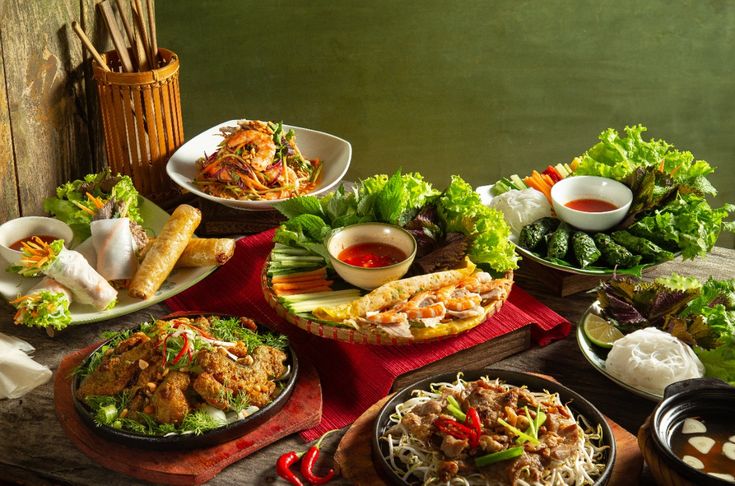
Lao cuisine is characterized by its freshness, fragrant herbs, and combination of spicy, sour, and savory flavors. Sticky rice (khao niao) is a staple in Lao meals and is often eaten with various dishes. One of the most iconic Lao dishes is Larb, a minced meat salad mixed with herbs, spices, and lime juice. Another popular dish is Tam Mak Houng, a spicy green papaya salad.

The cuisine also features dishes like Or Lam (a hearty stew made with vegetables and meat), Mok Pa (steamed fish in banana leaves), and Sai Oua (spicy Lao sausage). In Luang Prabang, you can try Mekong River fish dishes like Mok Pa Farang (grilled fish in banana leaves).

Lao cuisine incorporates a variety of fresh herbs and vegetables, including lemongrass, galangal, kaffir lime leaves, and coriander. These ingredients contribute to the vibrant and aromatic flavors in Lao dishes.

To complement the meal, Laos is famous for its local beverages. Beer Lao, a light and crisp beer, is a popular choice among locals and visitors alike. Lao-Lao, a rice-based spirit, is another traditional drink that is often consumed during festive occasions.

For coffee lovers, Laos is known for its delicious and smooth coffee. Lao coffee, often made with locally grown beans, is typically strong and served with condensed milk. You can enjoy it hot or over ice.

Exploring the local markets, street food stalls, and traditional restaurants is the best way to experience the diverse flavors of Lao cuisine. Whether you're savoring spicy dishes or indulging in refreshing drinks, Lao food and beverages are sure to leave you with a memorable culinary experience.

safety tips

  1. Personal Belongings: Keep your valuables, such as passports, cash, and electronics, secure and close to you at all times. Use hotel safes or secure lockers when available.

  2. Petty Crime: Exercise caution in crowded places and tourist areas, as petty theft and pickpocketing can occur. Be aware of your surroundings and keep an eye on your belongings.

  3. Scams: Be cautious of scams targeting tourists, including overcharging for services or goods. Always agree on prices beforehand and use reputable tour operators or transportation services.

  4. Traffic Safety: Be vigilant when crossing the roads, as traffic in Laos can be chaotic. Look both ways and use designated pedestrian crossings when available. Consider using a tuk-tuk or a taxi for longer distances.

  5. Natural Hazards: When visiting natural attractions, follow safety guidelines and instructions provided by local authorities. Be cautious of strong currents in rivers or waterfalls, and avoid swimming in unfamiliar or unsafe areas.

  6. Hygiene and Health: Stay hydrated and carry bottled water with you. Practice good hygiene, such as washing hands before eating. Use insect repellent and take necessary precautions against mosquito-borne diseases, such as dengue fever.

  7. Respect Local Customs: Familiarize yourself with local customs and traditions to show respect to the local culture. Dress modestly, especially when visiting temples or religious sites.

  8. Travel Insurance: Consider purchasing travel insurance that covers medical emergencies, trip cancellations, and lost belongings. Ensure that your insurance policy includes activities you plan to engage in, such as adventure sports or motorbike rentals.

Remember that these safety tips are general guidelines, and it's important to stay informed about the specific safety situation in the areas you plan to visit. Stay updated with travel advisories and consult with local authorities or your embassy for the most accurate and up-to-date safety information before your trip to Laos.

health and medical facilities

  1. Medical Facilities: In major cities like Vientiane and Luang Prabang, there are international-standard hospitals and clinics that provide a range of medical services. These facilities are equipped with modern equipment and staffed by trained medical professionals.

  2. Rural Areas: Medical facilities in rural and remote areas may be limited, with fewer resources and specialized services. It's advisable to have travel insurance that covers medical emergencies and consider the proximity of medical facilities when planning visits to remote regions.

  3. Medical Evacuation: In the event of a severe medical emergency or if specialized treatment is required, medical evacuation to a neighboring country or back to your home country may be necessary. Ensure that your travel insurance includes coverage for medical evacuation.

  4. Medications: If you require prescription medications, it's recommended to bring an adequate supply for the duration of your stay. Carry medications in their original packaging, along with a copy of the prescription. Some common over-the-counter medications may be available in pharmacies, but availability can vary.

  5. Travel Vaccinations: Before traveling to Laos, it's advisable to consult with a healthcare professional or a travel health clinic to ensure you are up-to-date on routine vaccinations and to receive any necessary travel-specific vaccinations, such as for hepatitis A, typhoid, or Japanese encephalitis.

  6. Water and Food Safety: To prevent water-borne diseases, drink bottled or purified water, and avoid consuming uncooked or unpeeled fruits and vegetables, as well as street food that may not be prepared under hygienic conditions.

In case of a medical emergency, contact your travel insurance provider or seek assistance from your embassy or consulate in Laos. It's important to have appropriate travel insurance that covers medical expenses and evacuation to ensure peace of mind during your visit to Laos.

tipping

Tipping in Laos is not a widespread practice and is not expected in most situations. However, it is becoming more common in tourist areas due to the influence of Western culture. If you receive exceptional service or want to show appreciation, a small tip of around 5-10% of the bill can be given at high-end restaurants or hotels. Tipping taxi drivers is not customary, but rounding up the fare can be appreciated. Keep in mind that the local staff may not be accustomed to receiving tips, so it is always best to gauge the situation and follow your own discretion when considering tipping in Laos.

WHEN TO GO & WEATHER

Laos experiences a dry season from October to April and a wet season from May to September. Occasional rainfall may occur between March and June, usually in the early morning or at night. This period also tends to be one of the hottest times of the year.

Our Travel Designers tailor memorable trip just for you

REQUEST A CUSTOMIZE TRIP